Estradiol Patch vs. Pill vs. Spray vs. Gel: Navigating the Estradiol Patch Shortage
6 minute read

Summary
The ongoing, nationwide estrogen patch shortage is an important reminder that while the estradiol patch is one of the most familiar forms of treatment for women during menopause, it’s just one of several FDA-approved, evidence-based ways to deliver estradiol and control symptoms.
Menopause care continues to evolve, and women now have access to different, less-discussed form factors of Hormone Replacement Therapy (HRT), including some options that might even fit better into an individual’s lifestyle.
We understand how frustrating it can be to deal with the uncertainty of not knowing if you will be able to get a refill of a medication that’s essential to controlling your menopause symptoms, so we’re taking this moment as an opportunity to review and address the other types of estrogen therapy out there.
What Should I Do if I Can’t Get My Patch?
Medication shortages happen for all kinds of reasons. Manufacturers might hit their production limits, supply chains get tangled, and demand predictions miss the mark (and considering the increased advocacy in improving women’s health, it’s safe to say that demand for treatment has gone way up.)
But whatever the cause, the shortage is disrupting women’s treatment, with many experiencing breakthrough symptoms after having finally achieved stability.
Abruptly stopping medications can be disruptive, and it may take some time for your body to react to the sudden drop in circulating hormones. This can mean the return of hot flashes, night sweats, sleep disruption, or other symptoms your patch has previously kept in check.
The good news is that other types of estrogen therapy also provide symptom relief, and are more widely available.
If you have confirmed that your patch or regular dosage is unavailable, talk to your menopause-specialized physician about next steps. They can help you switch to another form of treatment, including options like a gel, spray or pill.

Estradiol Gels and Spray
Similar to the patch, estradiol gels and spray are transdermal treatment options that deliver bioidentical estradiol through your skin and into your bloodstream, bypassing first-pass metabolism in the liver.
While estradiol patches are applied once or twice a week, the gels and spray require more frequent doses, usually at least once daily.
(And for your safety, please note that gels and sprays have specific instructions concerning their application that you will need to review and follow before use.)
For women who prefer a daily routine, this offers an alternative to having to wear a patch for days at a time. They also don’t use adhesive, which can appeal to women who experience irritation from patches.
Depending on the specific product, gels and spray can offer flexibility in dosing, allowing your physician to adjust treatment as your needs change, especially during late perimenopause and the transition into early menopause.
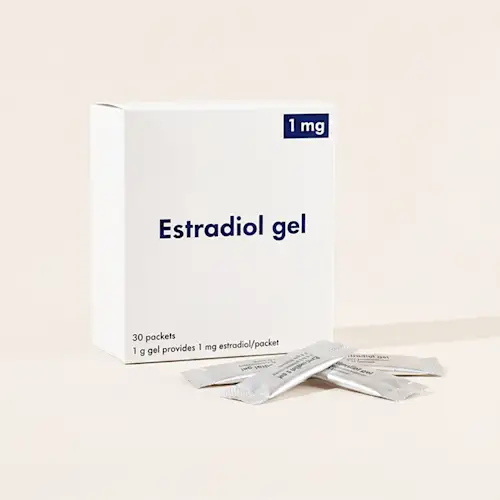
Estradiol Gel
$69.99 /mo
Pills
The estradiol pill is one of the most commonly prescribed HRT routes in the US, and it’s an attractive option for women who prioritize convenience or are used to taking daily medication as part of their routine.
Unlike the patch, when estradiol is taken orally, it’s absorbed through the gastrointestinal tract and passes through the liver before reaching the systemic circulation. This first-pass effect is one reason oral estrogen is associated with a higher risk of VTE (venous thromboembolic event) than transdermal estrogen.
To determine if oral estradiol is appropriate for you, your physician will consider your medical history, other medications, treatment goals, and potential risk factors, like blood clots or cardiovascular disease.
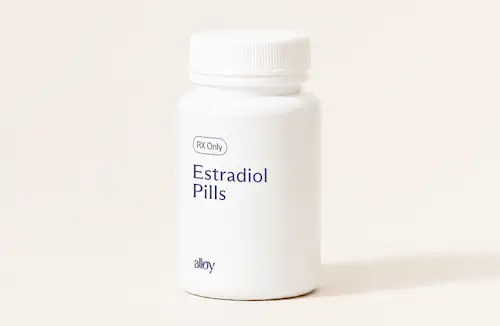
Estradiol Pill
Starting at $39.99 /mo
Vaginal Estrogen Cream Is Not a Substitute for Systemic Estrogen
Vaginal estrogen cream is sometimes part of menopause care, but it works differently than systemic estrogen therapy.
These low-dose creams are mainly used for genitourinary syndrome of menopause (GSM), which can bring on symptoms like vaginal dryness, burning, discomfort during sex, and changes with urination as estrogen levels drop.
Low-dose estradiol vaginal cream is applied directly to the affected area and generally results in much lower systemic exposure than systemic estrogen therapy, which means it can’t replace HRT for hot flashes, night sweats, or other full-body symptoms.
If you’re already using estrogen therapy for overall treatment, and have vulvovaginal symptoms, you might benefit from the concurrent use of vaginal estradiol treatment since HRT alone doesn’t always fully relieve GSM symptoms.
Why Estradiol Doses Aren’t Directly Interchangeable
If you’ve received a new prescription to replace your patches, they might not be the same strength as your previous prescription. While this can feel confusing, it’s totally normal.
“Estradiol can be given as a skin patch or gel, a pill, but these forms are not simply interchangeable milligram-for-milligram,” according to Dr. Stephanie Culver, a board-certified Ob/Gyn and a Menopause Society Certified Practitioner. “The same 'dose' on a label can result in different amounts of circulating estrogen in your blood depending on how it enters your body.”
Patches, for instance, are labeled by how much estradiol they deliver per day, while gels and sprays are labeled by the amount applied and not the amount your body actually absorbs.
This is why it is essential to speak with a physician who is trained in menopause care and has clinical experience. They have expertise to guide and personalize switching from one dosage and/or form to another, and know how to monitor your response.
Questions to Ask Your Doctor
If you’re unable to fill your current estradiol patch prescription, your menopause-specialized physician at Alloy is available for any questions you might have about switching.
Here are some items the two of you can discuss:
Make sure to ask your doctor how to transition from your current patch to the new dosage form. Ask if you should finish the patch you are on or use the new medication right away.
Ask your doctor about how to use the new prescription. It will come with instructions, but often prescribers will have helpful tips or additional directions to help with the switch.
Ask your doctor to go over the new dosing instructions for your new medication. Once you start your new treatment, you should use it according to its own set of instructions, not the ones that belonged to your previous patch or prescription. Even though the new product is a replacement for the patches, they may not be dosed the same, weekly or biweekly.
Ask your doctor about the acclimation period. If your symptoms start to come back or continue after this period, the new regimen may not be providing the same symptom control. Your physician can assess the new dosage and route and adjust accordingly.
The Bottom Line
A shortage in the medication you use to control your menopause symptoms should not stop you from getting relief. Continuing your treatment, even through a new method, can help protect your long-term health and keep you feeling like yourself day-to-day.
If you’re not sure what to do when your usual medication is out of stock, the board-certified menopause-specialized physicians at Alloy can help you figure out a transition plan that’s tailored to you.
Here at Alloy, we believe in personalized menopause care. Because the best-known option isn’t necessarily the only option for you.
Frequently Asked Questions
What alternative treatments can replace an estradiol patch if it is unavailable?
If your patch or regular dosage is unavailable, a menopause-specialized physician can help you switch to another form of treatment, such as a gel, spray, or pill. Estradiol gels and sprays are transdermal options delivered through the skin, requiring daily application rather than the once- or twice-weekly routine of a patch. Oral pills pass through the gastrointestinal tract and liver, so your physician will review your medical history and potential risk factors, such as blood clots or cardiovascular disease, to determine if they are appropriate for you.
Can low-dose vaginal estrogen cream replace a systemic estradiol patch?
No, vaginal estrogen cream cannot replace systemic hormone therapy for hot flashes, night sweats, or other full-body symptoms. Low-dose vaginal creams are applied directly to the affected area to treat genitourinary syndrome of menopause (GSM), such as vaginal dryness and discomfort. Because they result in much lower systemic exposure than systemic estrogen therapy, they cannot manage full-body symptoms on their own, though they can be used concurrently with systemic treatment.
Why is the dose for a replacement medication different from my previous patch?
Estradiol forms are not interchangeable milligram-for-milligram because the same dose on a label results in different amounts of circulating estrogen in your blood depending on how it enters your body. Patches are labeled by how much estradiol they deliver per day, whereas gels and sprays are labeled by the amount applied rather than the amount your body absorbs. A physician trained in menopause care must personalize your switch from one dosage or form to another and monitor your response.
Related Content
Subscribe
Go ahead, you deserve to
feel fantastic
By subscribing you agree to our Terms of Service & Privacy Policy.